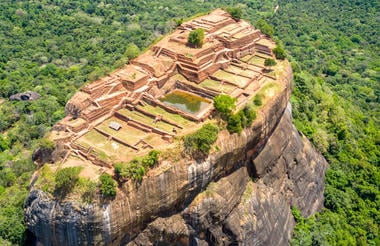
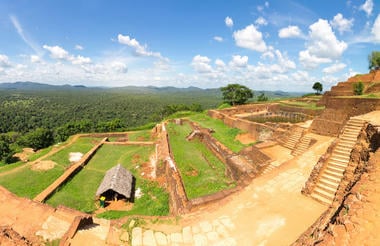
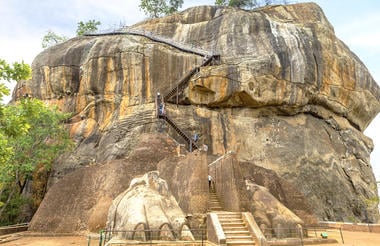
Situated in the northern Matale District of Sri Lanka, the small village of Sigiriya is best known for its proximity to the magnificent Sigiriya ‘Lion Rock’. The village offers some comfortable accommodations and a variety of restaurants for visitors to enjoy when stopping over to view the famous rock. This ancient rock fortress rises abruptly from the lush landscape and reaches over 200 metres in height. Crowning this massive outcrop are the ruins of an ancient civilisation, which are considered one of the best-preserved examples of ancient urban planning and have been listed as a UNESCO World Heritage Site. Visitors can walk through the lily-dotted moats, lush gardens and cave shrines, through the grand lion-paw entrance, and climb the series of steep staircases passing beautiful murals painted on the sheer rock walls, and enjoy exploring the ruins and soaking up spectacular views of the surrounds.
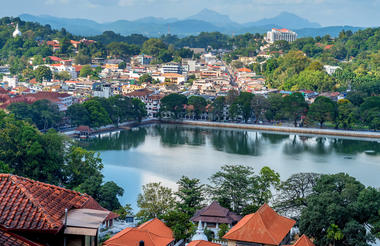
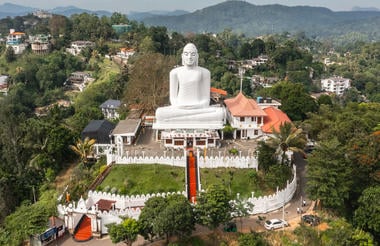
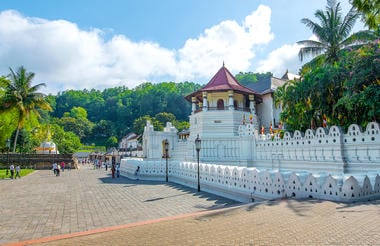
The second major city in Sri Lanka (the other being Colombo) lies at the centre of the Kandy Plateau, an area of beautiful tropical tea plantations. A magnificent must-see feature of the area is Kandy Lake, to the north of which lies the golden-roofed Temple of The Tooth (a UNESCO World Heritage Site and important place for Buddhist worship, as it is said to house a tooth relic of Buddha). Other fascinating places to visit include the Ceylon Tea Museum, the Buddhist Publication Society, the Ayurvedic centre in the Amaya Hills nearby, the Kandyan Art Association and Cultural Centre, where craftspeople can be seen at work, and the Kandy Muslim Hotel, which offers the finest spiced curries served with naan or Rotis.
Special note - If you're exploring the hill country, especially during the rainy season, please be aware of the presence of leeches in the region. These are common in damp areas such as forests, tea plantations, and trails. While they are harmless, encountering them can be uncomfortable.
If you are visiting similar locations, you may use leech socks to avoid leaches getting on you, which are pulled over the trousers to prevent leeches reaching the exposed skin of the legs. In addition to leech socks it is advisable to apply soapy water on your arms and legs before starting the trekking. For leeches, a good remedy is to apply soap and left to dry or apply lime to exposed areas.
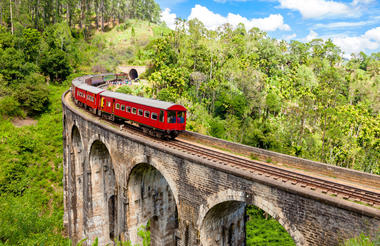
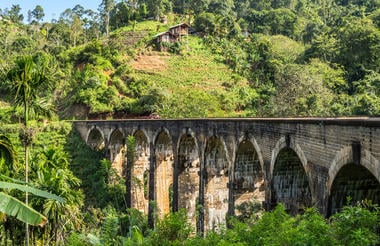
Resting on the southern edge of Sri Lanka’s picturesque Hill Country, the small, sleepy village of Ella is known for its exceptional natural scenery, its wonderfully tranquil atmosphere, and its pleasantly moderate climate. This popular backpacker-hub has become a well-established, must-see tourist destination and an ideal base for travellers exploring the idyllic surrounding countryside cloaked in tea plantations and lush forest. With only a handful of essential stores and tourist facilities, Ella has managed to retain its rural charm and visitors will find a single street winding its way down the hillside past a few quaint cafés, guesthouses and cottages enclosed in neat, flower-filled gardens. At the edge of the escarpment, you will find a classic view past the renowned Ella Rock on the right and through a cleft in the hills – the so-called Ella Gap – to the plains far below.
Special note - If you're exploring the hill country, especially during the rainy season, please be aware of the presence of leeches in the region. These are common in damp areas such as forests, tea plantations, and trails. While they are harmless, encountering them can be uncomfortable.
If you are visiting similar locations, you may use leech socks to avoid leaches getting on you, which are pulled over the trousers to prevent leeches reaching the exposed skin of the legs. In addition to leech socks it is advisable to apply soapy water on your arms and legs before starting the trekking. For leeches, a good remedy is to apply soap and left to dry or apply lime to exposed areas.
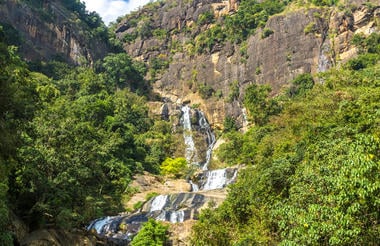
Tissamaharama, also known as Tissa, is a major starting point for wildlife safaris in Sri Lanka’s most famous national park, Yala, officially known as Ruhuna National Park. Surrounded by rice paddies and ancient temples, Tissamaharama is known for its rich cultural heritage and beautiful natural surrounds. Aside from its plentiful cultural and religious offerings, it is also a nature lover’s paradise. The Tissa Lake attracts flocks of roosting egrets, and a safari in the Yala National Park is a must. It covers an area of 1 260 square kilometres, but only one fifth is open to visitors. The remainder is designated as a natural reserve home to various wildlife, including elephants, leopards, sloth bears, water buffalos, wild boars, golden jackals, and spotted deer.
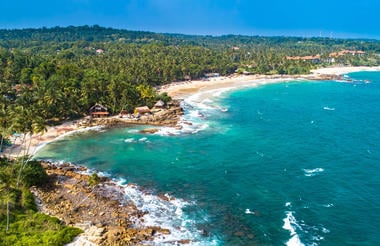
The large port town of Tangalle, in the southern province of Sri Lanka, offers locals superb fishing opportunities from a haven of sandy beaches, interspersed with photogenic rocky outcrops (giving the town its name - which means ‘projected rock’). Remnants of Dutch colonialism can be seen in the architecture; for example, in an old fort functioning as a prison today. The town serves as a starting point for a visit to the rock temple of Mulkirigala, situated on a rocky crag some 16 kilometres to the north. The temple consists of seven caves on five terraced levels, where visitors can view a number of large reclining Buddha statues interspersed with smaller sitting and standing figures, as well as some fantastical wall paintings.